
Comfortable shaving: how to choose a gel and aftercare without tightness
Tuesday 13th October 2026
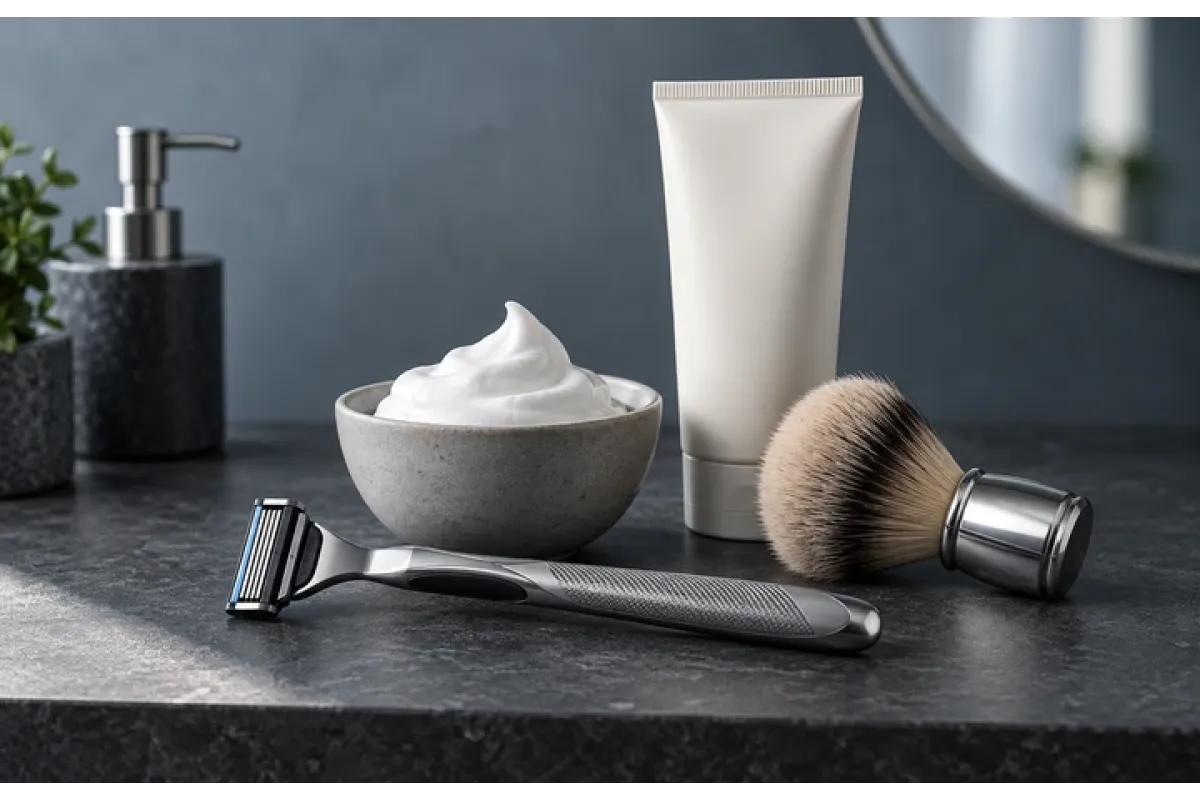
After shaving, you want your face to feel smooth and fresh, without immediately reaching for your richest cream. Buying a new gel, however, does not explain why your skin feels comfortable one morning and tight the next. Your shaving goal, everyday skincare and the way you use each product all matter. Understanding these details makes it easier to choose products that earn their place in your morning routine.
This guide focuses on facial shaving and beard outlines. It explains the difference between foaming and transparent gels, the purpose of a pre-shave oil and how to choose your final skincare step. There is no compulsory collection of five bottles: start with the way you normally shave and how your skin feels.
1. Start with your main goal
You shave your whole face
If you shave your cheeks, chin and neck each morning, consider which texture is easiest to spread across that area. Some people like a visible layer of foam; others prefer a transparent product. Compare application and removal rather than judging a product by the height of its foam. Also consider how much preparation time you have and whether you want to use your usual shaving brush.
You shape a beard or moustache
When working on small areas, seeing the edge matters. If thick foam hides where your beard ends, consider a transparent, non-foaming shaving gel. The product description should clearly identify it as a shaving product and explain how to remove the residue. A clear facial cleanser does not become a beard-shaping product simply because you can see through it.
Your priority is how skin feels afterwards
Note when discomfort appears: while applying the gel, immediately after removing it or after your final skincare product. These observations are more useful than saying that shaving does not suit you. Notice the location too: do your cheeks and neck feel the same? Avoid changing your gel, razor and cream simultaneously, because that makes it harder to identify what affected the result.
2. Four products with different jobs
Labels such as “for men” and “for beards” do not tell you when to use a product. Before adding it to your basket, answer one simple question: is it for before, during or after shaving? Products within the same range can still have very different instructions.
| Format | When to consider it | What to check |
|---|---|---|
| Foaming shaving gel | When you prefer visible coverage over the shaving area | How to create the foam, prepare skin and remove it |
| Transparent, non-foaming gel | When seeing beard edges and small areas matters | Whether shaving and contour work are stated uses |
| Pre-shave oil | When you want an extra step included in the instructions | Whether it accompanies a gel and also suits beard care |
| After-shave cream or balm | For the final skincare step | Purpose, texture, fragrance and fit with your usual routine |
Do not automatically assign a beard oil the role of a facial moisturiser. Likewise, an after-shave balm is not necessarily an appropriate substitute for shaving gel during the procedure. If a product has several uses, the manufacturer should explain each one.
3. Examples at Wellness Expert: Davines Pasta & Love
Davines Pasta & Love Softening Shaving Gel, 200 ml is an option for people who enjoy foam. Davines describes a gel-to-foam format applied to damp face and neck. Consider it if this application method suits you; choosing a foaming format simply because it feels familiar is unnecessary.
Davines Pasta & Love Non-Foaming Transparent Shaving Gel, 150 ml offers a different format for the same stage. The brand's guide links its transparency to seeing beard outlines. That is a useful starting point for contour work. You do not need both gels: choose the format that addresses your main task first.
Davines Pasta & Love Pre-Shaving & Beard Oil, 50 ml is an optional addition. The manufacturer lists pre-shave and beard-care uses. The bottle makes sense if you want those functions. There is no need to start with an oil, two gels and a new cream together: assess the basic set first.
Names help distinguish purpose but cannot guarantee the same tolerance for everyone. Check current instructions and the ingredient list on the packaging before buying. These examples do not promise irritation-free shaving or replace your own assessment of a product.
4. Preparation: read before your first use
The American Academy of Dermatology recommends wetting skin and hair before shaving and following hair growth. Check your chosen product's application method separately: a gel that becomes foam and a non-foaming formula can involve different steps.
Do not give every product the same guessed dose. Dispensers, shaving areas and instructions vary. Follow the recommended amount, distribute it where needed and check whether a shaving brush is part of the method. If instructions specify damp skin, do not turn the product into an experiment in dry shaving.
For an electric shaver, read the device manual first. The device must expressly allow water or gel. Selecting a wet-shaving product based only on the name of your shaver is not enough.
5. Afterwards: choose for your skin and texture preferences
Most people want two things from their final skincare step: comfortable application and a pleasant feel throughout the day. Richness, scent and ease of spreading matter in daily use, but words such as “refreshing” or “professional” do not explain an entire formula. Look for a clear purpose, then judge whether the product suits you.
AAD recommends fragrance-free skincare for sensitive skin and moisturising still-damp skin after shaving. When comparing creams, consider fragrance separately: do you enjoy it, and have you previously reacted to scented skincare?
If your usual cream is intended for the face and feels comfortable after shaving, an extra purchase needs a specific unmet purpose. Our article on gels, emulsions, creams and balms helps compare textures. Before introducing another product, ask whether it duplicates something you already own.
6. A simple morning sequence
- Prepare everything in advance. Set out your razor and products and read their instructions. This reduces rushing and confusion between steps.
- Apply your chosen shaving product. Use an optional oil only in the instructed combination. One gel is enough when getting started.
- Finish as instructed. Remove the product residue using the stated method. Check how skin feels before applying anything else.
- Apply appropriate final skincare. Choose morning SPF separately; an after-shave cream provides sun protection only when labelled accordingly.
Our everyday facial SPF guide covers choosing a sunscreen texture in more detail. Do not mix products inside a bottle to reduce the number of steps. Choose a sequence that is easy to repeat each morning instead.
7. Decide whether a new product deserves to stay
Compare similar conditions: the same shaving method, comparable stubble length and your usual final skincare. One successful morning cannot answer every question. Equally, you do not need to endure marked discomfort to complete an imagined trial period.
- Convenience: is the product easy to spread and remove, and can you see the edge you need?
- Feel: is there tightness, unpleasant burning or an urge to wash off the next layer immediately?
- Practicality: do the dispenser, size and application time fit your morning?
Discuss recurring irritation, painful bumps or persistent redness with a dermatologist. Choosing cosmetics should not become self-treatment. In that situation, bring the names of the products you use and explain the order in which you apply them.
8. Your checklist before buying
- Main goal: a full shave, contour work or beard care.
- Application stage: before, during or after shaving, with clear instructions.
- Skin preferences: familiar textures, fragrance preferences and previous experience.
- Reason for each bottle: the specific function it adds to your existing set.
One suitable shaving format and a clear final skincare step make a sensible starting point. Add oil or a second gel when a definite need appears. This makes it easier to build a small, convenient collection and understand precisely what you are paying for.
Mila Serani, Skincare & Beauty Editor at Wellness Expert